

How to set realistic and achievable New Year goals | Safe and Sound
The new year is a great time to refresh yourself and start setting goals. However, not everyone knows how to set realistic and achievable goals. Not knowing what you need to do or setting overly ambitious goals can lead to fatigue and a lack of motivation. This article provides detailed guidance from Safe and Sound's psychology experts to help you build meaningful and achievable goals, reducing stress and achieving tangible success in the new year.
Ngo Thi Sang | Master of Educational Psychology – Applied to Safe and Sound Mental Health Care
Institute of Applied Medical Technology
1. Why is setting goals important?
Setting goals is not just a mental exercise to organize your thoughts, but also a powerful tool to help you create a clear action plan and focus on what truly matters in life. When you know where you're going, you'll feel more confident, reducing stress and fatigue caused by not knowing what to do next.
1.1 Creating personal motivation

Setting goals helps create personal motivation.
When you have clear goals, your mindset becomes more stable. Every step you take is meaningful, and you know that all your efforts will bring you closer to what you desire. This helps create motivation not only for work but also for daily life. Psychologists say that specific goals help you maintain focus, thereby reducing stress and fatigue during the pursuit. Instead of feeling discouraged and lost, you will always have a clear direction and a goal to strive for.
1.2 Reduce feelings of being lost
Without clear goals, it's easy to feel lost and unsure where to begin. You'll feel confused and exhausted, not knowing what to prioritize. This is when your mental state is easily affected by a lack of direction. Goals help you navigate your life, helping you know what's important and what needs to be done first. As a result, you won't feel overwhelmed by the tasks and responsibilities piling up.

1.3 Measuring progress
Setting goals is a tool to help you measure your progress. This not only helps you track your progress but can also improve your mindset as you notice significant improvement. Regularly monitoring your progress allows you to reflect on what you've achieved and see that your efforts haven't been in vain. Psychologists emphasize that every small step you take is a great encouragement, helping you continue to act and achieve bigger goals in the future.
2. Steps to setting realistic New Year's resolutions
To ensure your New Year's resolutions aren't just on paper but actually achievable, follow these detailed steps. These steps will not only help you create a clear plan but also reduce stress and fatigue during the implementation process.
2.1 Using the SMART principle
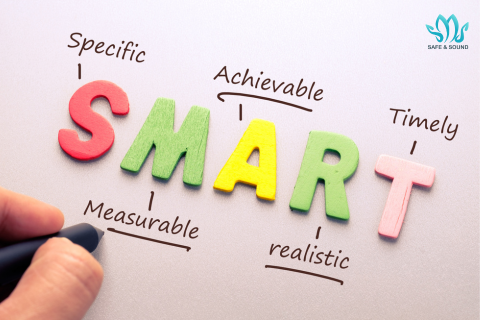
Using the SMART principle in goal setting
SMART is an effective and proven method for setting goals, helping you balance ambition and reality, thereby reducing psychological pressure during the process.
- S – Specific: Clear goals make it easier to determine what you need to do, avoiding ambiguity that causes stress. For example, instead of saying "I want to be healthier," say "I will go to the gym 3 times a week and eat at least 2 servings of vegetables every day." This specificity will help you clearly visualize the path you need to take.
- M – Measurable: A measurable goal helps you track progress and evaluate effectiveness. Psychologists say this also reduces mental fatigue from not knowing if you're on the right track. For example: Set a goal to save 20 million VND in 6 months, or lose 5kg in 3 months.
- A – Achievable: Goals should be aligned with your current abilities and circumstances to avoid feelings of discouragement or burnout. If a goal seems too ambitious, seek advice from mental health professionals or experienced individuals to assess its feasibility.
- R – Relevant: Psychologists share that goals should be aligned with your personal values and priorities, helping you feel more meaningful and motivated to pursue them. A goal unrelated to what you truly care about can create psychological pressure and make you more likely to give up.
- T – Time-bound: A goal without a specific deadline is prone to procrastination. Make sure you set a reasonable timeframe for completing your goal, such as "within 3 months" or "within 1 year." Clear deadlines not only provide motivation but also help you maintain better control, avoiding feelings of being overwhelmed or exhausted.
2.2 Break down goals
Big goals can sometimes create psychological pressure, making you feel stressed or overwhelmed. According to psychology experts, breaking down goals into smaller steps will help you manage them more easily and maintain motivation.
For example, if you want to learn a new language, start by learning 10 vocabulary words each day for the first week, then move on to 15 minutes of listening practice each day for the following week. Taking small steps will help you feel more confident and reduce fatigue.
Remember that every small step you take contributes to a greater success. If you're having trouble breaking down your goals, consider seeking support from mental health professionals or personal coaches to develop a suitable plan.
2.3 Prioritize what matters
Psychologists warn that setting too many goals at once can overwhelm you and leave you feeling disoriented, leading to unnecessary stress. Clearly identify which goals are most important at the moment.
- Make a list of all the goals you want to achieve, then rank them by priority. For example, if you are facing financial stress, prioritize saving money or improving your work skills before pursuing other goals such as learning a new hobby.
Focusing on one or two main goals will help you feel more at ease, instead of spreading your energy thin and becoming exhausted.
2.4 Record the goals

Recording the objective
Writing down your goals not only helps you remember them but also creates a strong mental commitment. Psychological research shows that keeping records helps you feel more accountable for your goals, thereby reducing the risk of procrastination.
You can write your goals in a notebook, use a phone app, or even write them on a whiteboard and place it where you see it frequently. Along with that, add a note explaining why this goal is important to you. This will remind you whenever you feel stressed or tired during the process.
2.5 Set flexible goals
Life often presents unexpected events, and sometimes these disrupt your plans. Psychologists advise that instead of rigidly adhering to your initial goals, you should learn to adjust flexibly to reduce stress.
Accept that change doesn't mean failure. For example, if you set a goal to run 5km a day but suffer an injury, you can switch to gentler exercises like yoga or walking during your recovery. If adjusting your goals causes you anxiety or frustration, seek advice from a mental health professional. They can help you rebuild motivation and find more suitable approaches.
3. What needs to be done to achieve the goal?
Plan meticulously: Detailed planning not only helps you organize better but also reduces stress from feeling overwhelmed when facing a large goal. Break down your goal into small, clear, and achievable steps so you can focus on each part instead of worrying about the whole picture. For example, if you want to improve your health, start by scheduling 30 minutes of exercise each day, instead of pushing yourself to achieve quick results. A clear plan helps you maintain motivation and minimize psychological pressure during the process.
.png)
Track your progress: Regularly tracking your progress not only helps you monitor your steps but also reduces mental fatigue by feeling like you're on the right track. You can record each milestone or use a tracking app to assess your progress. Psychologists say that each small achievement is a motivator that helps you maintain optimism and reduce stress. If you find yourself deviating from your plan, instead of worrying, calmly adjust and focus on improving in the next steps.
Don't be too hard on yourself: The psychological pressure of setting overly ambitious goals or failing to meet deadlines can leave you feeling exhausted and discouraged. Remember that the process of achieving goals isn't always smooth sailing. If you haven't completed your goal on time, instead of blaming yourself, reflect on the reasons and see it as an opportunity to learn. Flexibility and a gentle attitude towards yourself will help you relieve stress and continue striving without losing motivation.
Safe and Sound Clinic - Psychological Support and Family Health
With a team of experienced doctors and experts, Safe and Sound Clinic is a pioneer in providing comprehensive healthcare for you and your family, offering services that cover both medical and psychological care.
"Early Prevention—Timely Support—Long-Term Companion."
If you suspect or encounter any physical or mental health issues, please contact HOTLINE 0964 778 911 (phone/Zalo, 24/7) for prompt assistance and support!
HOW TO MAKE AN APPOINTMENT
You can schedule an online or in-person consultation with our experts:
- At SnS Clinic - IMT Institute
- Or download and schedule a consultation through the Safe and Sound app to manage and track your appointments anytime, anywhere.
Safe and Sound (SnS)—a part of the Institute of Medical Technology (IMT)

See more:
6 ways to help maintain motivation in work and life.
- How to boost employee intrinsic motivation: What leaders need to know
- A guide for beginners on practicing mindfulness to reduce stress.
